What “Just In” Really Means — How to Understand Urgent News Alerts
A Powerful Headline That Demands Attention
“BREAKING NEWS — Just in 5 minutes ago…”
Few phrases are more effective at grabbing attention online. The combination of urgency, mystery, and the promise of new information can make people stop scrolling immediately. But when a headline gives little information beyond “breaking news,” readers may be left wondering what actually happened, whether the information is confirmed, and why it matters.
In today’s fast-moving digital world, news can spread within minutes. A major announcement, unexpected development, public statement, accident, political decision, weather event, or celebrity update can quickly become a trending topic. At the same time, incomplete information can spread just as quickly.
That is why understanding how breaking news develops is more important than ever.
Why Breaking News Spreads So Quickly
Modern news travels at an incredible speed. A story can begin with a short statement, a social-media post, an eyewitness account, or an official announcement. Within minutes, thousands or even millions of people may see it.
Social-media platforms have changed the way people consume information. Instead of waiting for a newspaper or scheduled television broadcast, people receive notifications directly on their phones.
The first version of a story is often very short because journalists and news organizations are still gathering information. Important details may not yet be available.
For readers, this creates a challenge.
A headline published only a few minutes after an event may not contain the complete story. Additional information can appear later as reporters verify facts and official sources provide statements.
The First Few Minutes Can Be Uncertain
When an event is developing, the earliest reports can sometimes contain incomplete or conflicting details.
For example, imagine that authorities respond to an incident in a major city. Initial reports might say that emergency services are present. A few minutes later, officials may confirm what happened. Later still, authorities could provide information about injuries, damage, arrests, or other important details.
This process is normal.
Breaking news should therefore be viewed as a developing story rather than a finished account.
Readers should pay attention to whether an article clearly identifies its sources and whether later updates have been added.
What Makes a Breaking News Story Reliable?
A reliable breaking-news report usually provides several important elements.
First, it should explain what happened.
Second, it should identify where the event occurred.
Third, it should indicate when the event happened.
Fourth, it should identify the source of the information.
Finally, it should distinguish confirmed facts from claims that have not yet been independently verified.
These details help readers understand the difference between reporting and speculation.
A headline that simply says “BREAKING NEWS” without explaining the event provides very little useful information. A stronger report gives readers enough context to understand why the story matters.
The Importance of Official Sources
During major events, official sources can be particularly important.
Depending on the situation, these may include government agencies, police departments, emergency services, courts, hospitals, election authorities, weather agencies, or representatives of public figures and organizations.
Official statements do not automatically answer every question, but they can provide valuable confirmation.
For this reason, readers should be cautious about posts that claim something dramatic has happened but provide no identifiable source.
A dramatic headline alone is not evidence.
Why People Click on Urgent Headlines
Human psychology plays a major role in online news consumption.
Words such as “breaking,” “urgent,” “just in,” and “developing” create a sense that something important is happening right now.
Readers may feel that they need to click immediately because they do not want to miss an important event.
This is sometimes called the fear of missing out.
News organizations understand this behavior, but responsible publishers still have an obligation to provide accurate information rather than simply creating suspense.
A good headline should attract attention while remaining truthful.
The Difference Between a Headline and a Story
A headline is designed to summarize the most important part of a story.
It is not supposed to replace the story itself.
A headline may tell readers that an important development has occurred, but the article should provide the necessary context.
For example, saying “Major Announcement Just Made” creates curiosity, but it does not tell readers what was announced.
A stronger headline explains the event directly.
Clear information builds trust.
Why Readers Should Avoid Sharing Unverified Claims
When people see an alarming or exciting breaking-news post, they may immediately share it with friends and family.
Unfortunately, that can allow inaccurate information to spread before anyone has confirmed it.
Once a false claim becomes popular, correcting it can be extremely difficult.
That is why a few seconds of verification can make a significant difference.
Before sharing a breaking-news story, readers should ask:
Who reported this?
Is there an identifiable source?
Has an official organization confirmed it?
Are reputable news organizations reporting the same information?
Is the date correct?
Could an old story be circulating again?
These simple questions can prevent misinformation from spreading.
Developing Stories Often Change
One of the most important things to remember about breaking news is that information can change.
A preliminary report may later be corrected.
An early estimate of damage may be revised.
A person's identity may initially be unclear.
Officials may confirm or deny information that appeared on social media.
These changes do not necessarily mean that journalists are deliberately misleading people. Reporting a developing event requires continuous verification.
Responsible news organizations update their reports when new facts become available.
Social Media and the Speed of Information
Platforms such as Facebook, X, Instagram, TikTok, and other social networks have made breaking news almost instantaneous.
A person at the scene can potentially publish information before traditional media arrive.
This can be useful because eyewitnesses may provide valuable information.
However, eyewitnesses may not know the entire situation.
A person might see emergency vehicles but not know why they are there. Someone may record part of an event without understanding what happened before or after the video.
Therefore, eyewitness material should be treated as one piece of information rather than the complete story.
The Role of Photos and Videos
Images and videos can make breaking news especially powerful.
A photograph can provide evidence that an event occurred, while video may show what happened in a particular moment.
But visual material can also be misunderstood.
A genuine image can be old.
A video can be from another location.
A photograph can be cropped in a way that removes important context.
For this reason, readers should consider when and where an image was taken before assuming it represents the current event.
How Responsible Readers Can Stay Informed
The best approach is simple: slow down when the headline tells you to hurry.
Instead of immediately sharing a dramatic post, look for additional information.
Read beyond the headline.
Check the publication date.
Look for named sources.
Compare reports from reputable organizations.
Return later to see whether the story has been updated.
This approach does not mean ignoring breaking news. It means consuming it responsibly.
Why Context Matters
Breaking news often becomes easier to understand when placed in context.
An announcement may appear surprising until readers learn what happened previously.
A political decision may be connected to months of debate.
A court development may be part of a much longer legal process.
A weather warning may be connected to a larger storm system.
Without context, readers may misunderstand the significance of a new development.
A good article therefore explains not only what happened, but also why it matters.
The Emotional Side of Breaking News
News can produce powerful emotions.
People may feel shocked, frightened, angry, relieved, or hopeful.
Emotional reactions are natural, especially when the story involves people, public safety, tragedy, or major political developments.
However, strong emotions can make it harder to evaluate information objectively.
When a story makes you extremely angry or frightened, it can be especially useful to pause and verify the facts before reacting or sharing.
A Better Way to Follow Developing Stories
Instead of relying on a single social-media post, readers can follow the story over time.
Look for updates from credible news organizations.
Check official announcements when available.
Pay attention to corrections.
Notice whether the headline has changed as more information becomes available.
This approach provides a much clearer picture of what actually happened.
Why Accuracy Matters More Than Speed
Being first is valuable in journalism, but being accurate is more important.
A report published two minutes later with verified information can be far more useful than a report published immediately with incorrect details.
In the digital age, speed is easy.
Verification is the difficult part.
Responsible journalism requires both.
What Readers Should Expect From Good News Reporting
A strong breaking-news article should answer the basic questions:
What happened?
Where did it happen?
When did it happen?
Who is involved?
What is confirmed?
What remains unknown?
What happens next?
These questions give readers a clear understanding of a developing story.
Final Thoughts
“BREAKING NEWS — Just in 5 minutes ago” is the kind of headline that immediately captures attention. But the real value of breaking news is not the urgency of the headline. It is the accuracy and context behind it.
Events can develop quickly, and information can change as authorities, journalists, witnesses, and experts learn more.
For readers, the smartest response is to remain interested without becoming careless.
Pause before sharing.
Check the source.
Read the full story.
Look for confirmation.
Remember that early information may be incomplete.
Most importantly, distinguish between a dramatic headline and verified reporting.
In a world where information travels faster than ever, being informed does not simply mean seeing the news first. It means understanding what is actually known, recognizing what remains uncertain, and waiting for reliable information when necessary.
When Malia Obama walked to the microphone, the air shifted. No father beside her, no presidential seal, no script written to reassure a divided nation. Just a young woman, hands steadying around a story that was finally her own. Years of scrutiny, doubt, and expectations pressed in as she began to spea… Continues…
In Los Angeles, far from the White House corridors that once defined her world, Malia Obama chose to introduce herself not as a former First Daughter, but as a creator. She spoke plainly about the cost of growing up as a projection screen for other people’s narratives, and about the quiet terror of failing where everyone could see. Yet what ultimately unsettled her more was the idea of never starting at all—of letting fear of missteps erase whole futures before they had a chance to form.
Her answer is a new creative venture built slowly, almost stubbornly, out of sight. Focused on storytelling and production, it is less a bid for attention than a refusal to be reduced to a last name. She is not pretending her legacy doesn’t exist, nor trading on it for applause. Instead, she is drawing a line: what was inherited is acknowledged; what comes next must be earned. In that choice, her intention becomes its own quiet, radical beginning.
Sirens wailed as the sky over Region B turned violent without warning. Families ran for cover, power grids failed, and the wind began tearing pieces off the world they thought was safe. Streets vanished under water and debris. Inside shaking houses and crowded shelters, one question echoed: how bad will this get, and who won’t make it ho… Continues…
storm that tore across Region B arrived like a betrayal, turning an ordinary day into a test of endurance. Within minutes, the familiar landscape was swallowed by roaring winds, sideways rain, and a darkness broken only by emergency lights and flashing alerts. Those who hesitated outside felt the force of flying debris and collapsing branches, realizingcontinue reading …
too late that this was no ordinary squall but a Level 3 threat with no patience for denial.
Inside community shelters, fear mixed with a fragile sense of solidarity. Neighbors who had barely exchanged greetings now shared blankets, phone chargers, and whispered updates. Volunteers moved quickly, calming children and checking on the elderly as meteorologists continue reading …
It was an ordinary morning, a peaceful stroll along the water's edge with her faithful four-legged companion. Then, there on the sand: a dark, motionless shape, utterly inexplicable. Neither fish, nor jellyfish, nor anything recognizable. A silhouette that seemed to have come straight from another world. She instinctively stopped. A choice she would never regret.
A heart-stopping encounter
The creature washed up on the shore was a stingray—a very real species found on the Atlantic coast. Impressive, unsettling, and seemingly lifeless. While waiting to learn more, our walker kept her distance. Her dog, however, was far less cautious: nose first, he sniffed the animal with disconcerting curiosity.
It was only after contacting a marine biologist that the truth emerged, as cold as the Atlantic Ocean. The stingray possesses one or more venomous barbs near the base of its tail. And the most disturbing part? Even dead, it can still inflict pain. The barb, a keratinous structure similar to a fingernail, retains its power to wound for several hours after the animal's death.
The danger that we don't see coming
This kind of accident happens more often than you might think. The expert even mentioned the famous Steve Irwin, the "crocodile hunter," who died after a stingray barb pierced his heart. It's a powerful image that reminds us that nature, even on a familiar beach, deserves respect.
The symptoms of a stingray sting are serious: intense pain, swelling, muscle cramps, and nausea. In rare cases, complications can occur. No need to panic, but definitely something to be aware of.
What should you do if you find an unknown creature on the beach?
Here are the right reflexes to adopt, without hesitation:
– Never touch a stranded marine creature, even if it appears dead. – Keep your pets away : dogs love to sniff, but it's risky. – Take photos from a distance to identify the species. – Contact the local authorities or the maritime police—they can intervene safely. – Do not attempt to return it to the water without professional advice. – If accidental contact occurs , wash your hands thoroughly and monitor for any skin reaction.
Marine creatures to watch out for on our coasts
Jellyfish, weever fish, Portuguese man o' war (those infamous "Portuguese man o' war"), sea urchins, pufferfish… The list of potentially dangerous species that wash up on French beaches is longer than you might think. Even jellyfish tentacles separated from the body can cause stings. Caution is always advised, especially with children and animals.
A lesson etched in the sand
Since that morning, the walks have continued—but with a different perspective. The leash is a little shorter, eyes scanning the sand before each step. The ocean is fascinating, bountiful, but it remains a world that largely eludes us.
The sea always retains an element of mystery, and that is precisely what makes it so beautiful.
But behind the closed doors of the presidential family, another story is unfolding. A story that no one had ever truly told. Until now.
On Thursday, May 7, 2026, a book came along that challenged the official narrative. Journalist Béatrix de L'Aulnoit published a book with the evocative title: They Loved Them So Much . The book explores a little-known aspect of the lives of French presidents.
This book isn't about the romantic conquests of the residents of the Élysée Palace. Nor is it interested in their advisors or their political opponents. No. This book is about a much deeper, much more visceral connection.
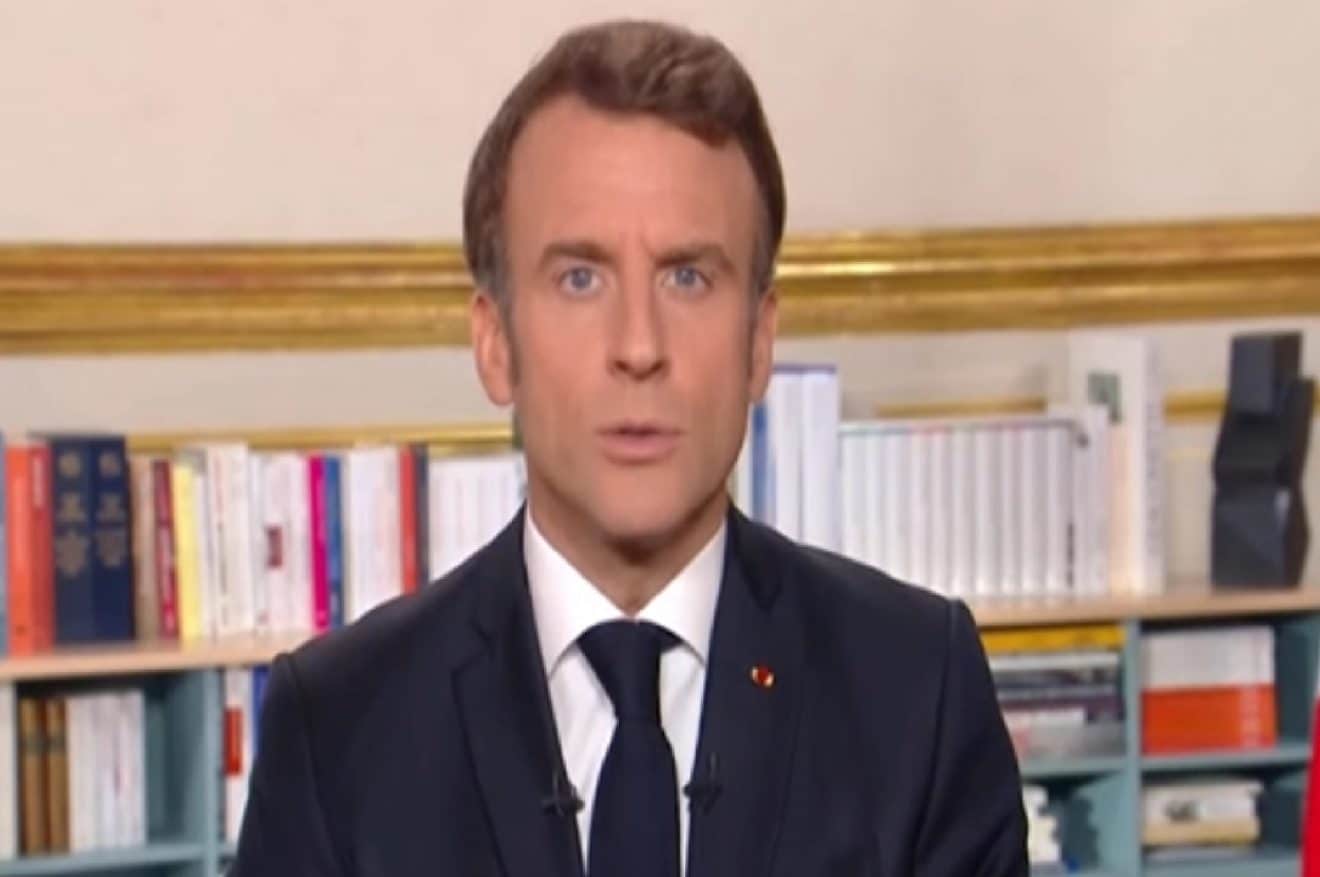
He discusses the relationship between the presidents of the Republic and their mothers . And what is revealed about the current head of state is enough to generate discussion for weeks.
Because in these pages, a discreet woman, almost invisible in the French media landscape, finally speaks out. And what she reveals about the First Lady is as direct as it is surprising.
A love story that turned everything upside down
To understand the significance of these revelations, we must go back in time. Thirty years ago, to be precise. In a city in northern France, in a prestigious school.
In the mid-1990s, a bright teenager crossed paths with a teacher passionate about theatre. The encounter took place at La Providence, a private school in Amiens. He was a student. She was a teacher.
At that time, no one imagined that this encounter would change the destiny of France. The teenager in question was a discreet young man, passionate about literature and philosophy. He impressed his classmates with his maturity.
The teacher is married and a mother of three. She runs a drama workshop at the school. It is in this context that the two become closer. First intellectually. Then in other ways.
What happens next, everyone knows — or thinks they know. But behind the smooth, romantic public narrative lies a much more tumultuous reality .
Because this love story didn't just turn two lives upside down. It shook two entire families. And some wounds, three decades later, have still not healed.
The inner chaos of a woman caught in turmoil
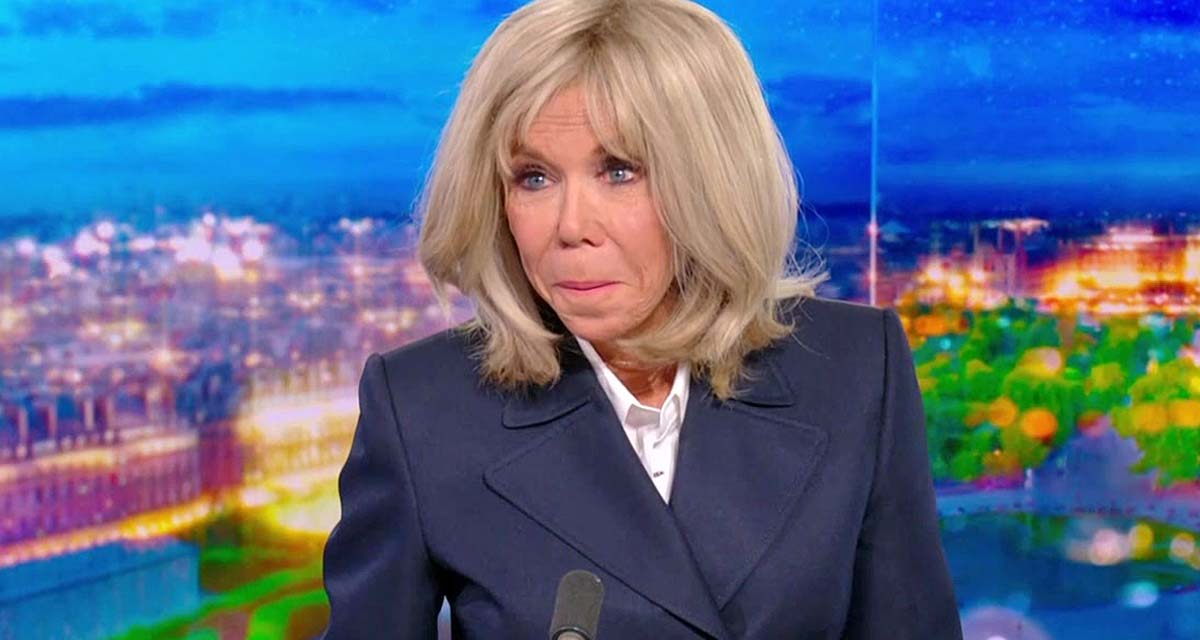
In November 2023, the First Lady agreed to an interview with Paris Match . A rare interview, disarmingly sincere. In it, she reflected on the early days of this unlikely relationship.
Her words were those of a woman who had long struggled with her own feelings. "My head was a mess ," she admitted. A raw, unfiltered confession that contrasted sharply with the controlled image she usually projects.
She had spoken of her father's death, which occurred during a period of upheaval. This grief compounded the emotional turmoil she was experiencing. An inner hurricane, in her own words.
The age difference, above all, seemed to her an insurmountable obstacle. A wall she thought was insurmountable. "For me, a boy so young was a deal-breaker ," she confided.
She had even convinced herself that everything would naturally fall apart. That the young man, upon leaving Amiens for Paris, would fall in love with a girl his own age. That time would do its work. That reason would prevail over feelings.
But none of that happened. And for her part, the teacher had made a radical decision: she never led another theatre workshop at Providence.
Ten years in the shadows to protect three children
What many people don't know is that this love story took almost a decade to fully blossom. Ten long years of patience, doubt, and sacrifice.
The reason for this interminable wait? Three children. Three young lives that the future First Lady refused to sacrifice on the altar of her passion. That was her absolute red line.
“The only obstacle was my children ,” she explained to Paris Match . Simple words that conceal a painful reality. For ten years, she did everything she could to protect her children from stares, judgments, and cruel remarks.
"I took my time so as not to ruin their lives ," she continued. Ten years. Time to raise them, to guide them, to set them on the right path, as she herself put it.
But those ten years were anything but smooth sailing. Rumors circulated. In Amiens, everyone knows everything. In the bourgeois circles of this Picardy city, this relationship caused quite a stir. And the children weren't spared.
"Can you imagine what they heard?" the First Lady blurted out. A short sentence, heavy with meaning. Behind these few words, one can imagine ruthless school playgrounds, thinly veiled adult remarks, and sidelong glances.
Despite everything, she held firm. Because she had a deeply held conviction: "I didn't want to miss out on my life."
The weight of family's gaze
While the children were the main obstacle, the extended family was also a significant factor. The teacher came from a background where traditional values held sway.
Her parents embodied a classic model: loyalty, education, respectability. All these values made the situation even more complex, even more painful.
She herself had wondered what her parents would have thought of all this. "I don't know how my parents, who were the epitome of fidelity and good upbringing, would have reacted to our marriage ," she confided.
His siblings, however, had found their own way of handling the situation. With humor, that typically French weapon that allows you to say a lot without seeming to.
"Dad, up there, is reading Paris Match ," they joked. A quip that spoke volumes about the mixture of pride, astonishment, and perhaps embarrassment that this union provoked within the family.
But there was another family. A family that had also been hit hard by this love story. And in that family, the reactions were very different.
A respectable and discreet family from Picardy
On the side of the young man who became president, the family was just as bourgeois, just as attached to conventions. Perhaps even more so.
His father was a doctor, a professor of neurology at the Amiens University Hospital to be precise. His mother also worked in the medical field. A couple of practitioners, deeply rooted in the respectable Picardy region.
In this world, you don't make waves. You don't cause a stir. You follow a well-trodden path: brilliant studies, a respectable career, a suitable marriage. Young Emmanuel ticked all the boxes—except the last one.
Because when his parents discovered the nature of his relationship with his teacher, the shock was immense. How could it have been otherwise? Their son, a gifted teenager, had fallen in love with a woman twenty-four years his senior.
A married woman. A mother of three. And above all, a woman who was supposed to mentor him, educate him, guide him. Not fall in love with him.
Legend has it that the young man's parents initially tried to believe it was just a teenage crush, a passing infatuation that would eventually fade. But they quickly realized it was much more serious than that.
The parents' radical decision
Faced with this situation, the parents made a drastic decision. A decision which, in itself, speaks volumes about the seriousness of the situation in their eyes.
They took their son out of Providence, the school where he had met the woman who would become his wife, and sent him to Paris, to the Lycée Henri-IV , one of the most prestigious schools in France.
The goal was clear: to put distance. Miles between their son and this woman they considered a threat to his future. Paris versus Amiens. The capital versus the provinces. Reason versus feelings.
But what the parents hadn't anticipated was their son's determination. At Henri-IV, the young man excelled. He shone in philosophy. He impressed his teachers. But he didn't forget.
Almost every weekend, he calls. He writes. He maintains the connection, against all odds. Far from killing the relationship, the distance seems to strengthen it. As if the separation only fans the flame.
The parents helplessly witness this obstinacy. Their strategy has failed. And what follows will deal them another blow to their morale.
A brilliant career that doesn't change feelings.
After attending Henri-IV, the young man enrolled at Sciences Po. Then the ENA. He accumulated degrees like others collect trophies. His academic record was flawless.
He went through the Rothschild bank, where he carried out spectacular financial transactions. He entered politics through the front door, noticed by the highest echelons of power. His rise was meteoric.
But at each stage of this dizzying ascent, he remains faithful to the same woman. The one he met as a teenager, in a classroom in Amiens. The one his family would have so much wanted to see disappear from his life.
In 2007, the couple officially married. The ceremony took place in Le Touquet, in the Pas-de-Calais region. It was a moment that was both joyous and fraught with tension, as not everyone in the groom's family was in a celebratory mood.
The age difference, the initial situation — teacher and student —, the bride's previous divorce: all these elements make this union difficult for some family members to accept.
And yet, the wedding does take place. In front of relatives, in front of friends. In front of a family that puts on a brave face, even if, behind the scenes, the rifts are deep.
A mother's invisible wounds
When this love story is discussed in the media, the focus is often on the couple. The strength of their feelings, their obvious connection, and the way they look at each other in public are discussed.
But we almost always forget the collateral damage. And among this damage is a woman whom France barely knows. A woman who experienced this story not as a romance, but as a family earthquake .
This woman is the president's mother. A doctor by training, she dedicated her life to healing others, to caring for them. But faced with her son's romantic situation, she found herself completely helpless.
For years, she remained silent. Discreet, as was her custom. Refusing media requests. Declining invitations from journalists. Keeping a respectable distance from the spotlight.
But Béatrix de L'Aulnoit's book lifts a corner of the veil on what this mother truly felt. And the revelations are eye-opening.
When a president's mother refuses to play her role
In *They Loved Them So Much* , journalist Béatrix de L'Aulnoit paints a fascinating picture of mother-son relationships at the highest levels of government. From De Gaulle to the present day, each president has maintained a unique bond with his mother.
Some mothers were omnipresent, guiding figures. Others remained in the shadows, discreet but influential. A few experienced their son's rise to fame as a personal achievement.
But the case of the current president's mother is unique. For her, the pride of having a son at the Élysée Palace clashes with a wound that has never truly healed.
This wound has a name. Or rather, it bears the face of a woman. The woman his son chose. The former teacher who became First Lady of France.
According to the book's revelations, the president's mother was long unable to take a stance regarding her daughter-in-law. And for good reason: the situation was, by her own admission, deeply destabilizing .
How do you play the role of stepmother when your son's wife is almost the same age as you? How do you find your place in such an unusual family situation?
A minor civil status detail that changes everything
Béatrix de L'Aulnoit points to a concrete element that perfectly illustrates the unease. A detail that, in itself, sums up the entire complexity of the situation.
The president's mother is only three years older than his daughter-in-law. Three short years. A negligible difference between two women who, in the family tree, belong to two different generations.
Imagine the scene. Family gatherings. Christmas meals. Birthdays. Two women, almost contemporaries, one supposedly the mother, the other the daughter-in-law. An unprecedented situation in the history of the Fifth Republic.
This discrepancy between the administrative reality — a mother-in-law and her daughter-in-law — and the biological reality — two women of the same generation — made any normal relationship impossible for many years.
The president's mother couldn't act like a typical mother-in-law. Offer advice. Play the matriarch. Welcome the newcomer into the family fold with kindness. It all rang false.
On the other hand, the First Lady couldn't play the role of the docile and deferential daughter-in-law either. She was far from being a young woman intimidated by her in-laws. She was their contemporary.
A father who chooses his side
While the president's mother long navigated an emotional gray area, his father took a much more decisive stance. And this position has not changed over time.
Jean-Michel Macron, a professor of neurology, is described by those who know him as a rigid man, attached to principles. A brilliant intellectual, but not inclined to compromise.
Béatrix de L'Aulnoit's book reveals that the president's father never got over his son's marriage. Never. Not even after the 2017 presidential election. Not even after the 2022 re-election.
This information is corroborated by a key witness: a man who knows the family and the Picardy region well, a former elected official from the Somme who worked closely with the Macrons for years.
This witness, former MP Olivier Jardé, revealed a detail that speaks volumes more than any speech. A detail that reveals the extent of the rift within the presidential family.
When the president comes to Amiens — for an official meeting or a funeral — he has lunch with his father. But these lunches have one peculiarity: the First Lady is never invited .
“When the President of the Republic comes to Amiens, for a meeting or a funeral, Jean-Michel Macron has lunch with his son, but always without Brigitte ,” stated Olivier Jardé.
Meaningful father-son lunches
This revelation carries considerable symbolic weight. It shows that thirty years after the events, the president's father still refuses to share a meal with his daughter-in-law.
This isn't a passing falling-out. Nor a one-off disagreement. This is a systematic, methodical rejection that has lasted for decades. A silent but relentless rejection.
The President of the Republic, the most powerful man in France, thus finds himself in a situation experienced by millions of French people: being caught in the middle between his father and his wife.
Except that in her case, the stakes are tenfold. Every trip to Amiens becomes a diplomatic exercise. Every family meal is a minefield. Every absence of the First Lady from her father's table is a reminder of the original wound.
How is the president experiencing this situation? No one really knows. On this subject, he is absolutely discreet. Never a word in public. Never a confidence to journalists. A silence that, in itself, speaks volumes.
Béatrix de L'Aulnoit's book places this situation in a fascinating historical perspective. The relationship between the presidents of the Fifth Republic and their mothers has always been a subject rich in revelations.
Charles de Gaulle revered his mother, Jeanne Maillot. It was she who instilled in him a sense of duty and greatness. When he spoke of France, it was she he was thinking of, biographers say.
Georges Pompidou, for his part, was the son of schoolteachers. His mother, Marie-Louise, instilled in her son a taste for hard work and discretion. Values that the president retained throughout his life.
François Mitterrand had a complex relationship with his mother Yvonne, marked by both tenderness and distance. The future president inherited from her a certain penchant for secrecy that would characterize his entire political career.
Jacques Chirac adored his mother Marie-Louise. Their close bond was legendary. It is said that even at the Élysée Palace, he called her regularly on the phone, sometimes several times a week.
Nicolas Sarkozy, on the other hand, had a more troubled relationship with his mother, Andrée. His parents' divorce when he was a child left deep scars—wounds that the former president has often spoken about publicly.
The peculiarity of the current case
But none of these cases resemble that of the current president. Because in his story, the mother is not just a protective figure or a childhood memory. She is an active character in the family drama.
A woman faced a situation no president's mother had ever experienced before. Her teenage son fell in love with his teacher. And against all odds, the relationship lasted. It withstood time, distance, and family pressures.
For this doctor mother, accustomed to making diagnoses and finding solutions, the situation must have been immensely frustrating. Because there is no treatment for feelings. No prescription for love.
And perhaps the worst part was that she couldn't hate this woman either. Because this woman made her son happy. Because she was there for him, supported him, and carried him to the top.
How can you hate someone who makes your child happy? How can you accept someone who has shattered all your certainties? This impossible dilemma was one the president's mother carried for years. In silence.
The clues that no one had noticed
In hindsight, the signs of this family unease were nonetheless visible. One only had to look closely at the official images, the campaign photos, the election nights.
On the evening of the first round of the 2017 presidential election, when the candidate appeared on stage, triumphant, who was by his side? His wife, of course. His stepchildren. His close collaborators.
But what about his parents? Absent from the image. Absent from the celebrations. Absent from the televised embraces. An absence that commentators failed to notice at the time, too busy analyzing the election results.
On the evening of the second round, the same observation held true. The victory was historic. The youngest president of the Fifth Republic had just been elected. But amidst the jubilation at the Carrousel du Louvre, the new president's parents were conspicuous by their discretion.
It wasn't that they weren't proud. It was that the First Lady's presence at every moment, in every photo, in every embrace, made their own presence complicated .
How can you pose next to the woman you've never truly accepted, in front of millions of viewers? How can you smile for the cameras when your heart is torn between pride and bitterness?
A biography that had already sown clues
Before Béatrix de L'Aulnoit's book, another journalist had already come close to the truth: Anne Fulda, author of a biography of the president published in 2017, entitled A Young Man So Perfect .
It was to Anne Fulda that the president's mother granted one of her rare interviews. A measured, cautious interview, as one might expect from such a reserved woman.
But even in her restraint, certain words had struck a chord. For the mother of the head of state had let slip a sentence. A short sentence, almost innocuous on the surface. But one of striking sincerity.
A sentence that summed up, in a few words, years of inner turmoil. Years of questioning, resistance, and forced acceptance. Years of watching her son drift away to a woman she hadn't chosen for him.
Béatrix de L'Aulnoit repeats this phrase in her book. And in this new context, it takes on an even more powerful resonance. Because it is no longer isolated. It is part of a larger narrative, supported by multiple testimonies.
But before getting to that, we need to understand what was going on in this mother's mind. This mixture of maternal love and bewilderment in the face of the uncontrollable.
The journey of a woman who never wanted to be famous
Françoise Noguès — since we must name her at some point — never sought the limelight. Born in southwestern France, she grew up far from Parisian circles and their intrigues.
After becoming a doctor, she settled in Amiens with her husband, Jean-Michel. Together, they built a discreet, middle-class life: respected medical careers, bright children, and a stable home.
Emmanuel is the eldest of the siblings. Very early on, his parents noticed his exceptional intelligence, his insatiable curiosity, and a maturity that both impressed and worried them.
Because an overly mature child is also a child who escapes parental control more quickly than others. A child who makes their own decisions. Who follows their own path. Even when that path leads to a dead end—at least, that's what their parents think.
For Françoise Noguès, her son's relationship with his teacher was a shock all the more violent because she hadn't seen it coming. Like an unexpected diagnosis. An illness whose symptoms she didn't know.
The initial shock and the attempt at control
When the Macron parents understood the nature of their son's feelings, their first reaction was that of any parent confronted with the unacceptable: they tried to regain control.
Sending him to Paris, to the prestigious Lycée Henri-IV, is their main weapon. It's a decision intended to be final. A definitive end. The teenager is separated from his teacher, and life resumes its normal course.
But legend has it that young Emmanuel, before leaving Amiens, made a promise to the woman he loved. A promise that, coming from a 17-year-old, might have seemed like a boast: "I will return and I will marry you."
This phrase, reported by numerous biographers, has become one of the founding myths of the presidential couple. Whether true or embellished by time, it illustrates the unwavering determination of the young man.
And for his parents, she represented a threat. Proof that their son wasn't going to move on. That it wasn't a teenage whim, but an irrevocable decision.
Françoise Noguès, as a mother, must have experienced this period as a waking nightmare. Her brilliant son, destined for a very bright future, stubbornly persisted in a relationship that everyone — or almost everyone — considered impossible.
Years of hope and disappointment
During their son's years in Paris, the Macron parents undoubtedly hoped. They hoped that a meeting, a new story, would erase the old one. That life would take its course.
At Sciences Po, young Emmanuel mingles with brilliant, cultured female students his own age. The perfect breeding ground for a new romance. But nothing happens. His heart already belongs to someone else. For good.
Then came the ENA (National School of Administration). Then the senior civil service. Then investment banking. At each stage, the young man rose in power, accumulating professional successes. But his love life remained the same.
For his parents, each passing year without change is another disappointment. One less hope. Until the day there is no hope left at all: their son announces he is getting married.
The wedding in 2007. In Le Touquet. With the woman of his life. The one who is twenty-four years his senior. The one who is three years younger than his own mother. Full circle. And for Françoise Noguès, it's a devastating blow.
When politics gets involved
The election of Emmanuel Macron in 2017 added another dimension to this family saga. Because overnight, this private story became a matter of state.
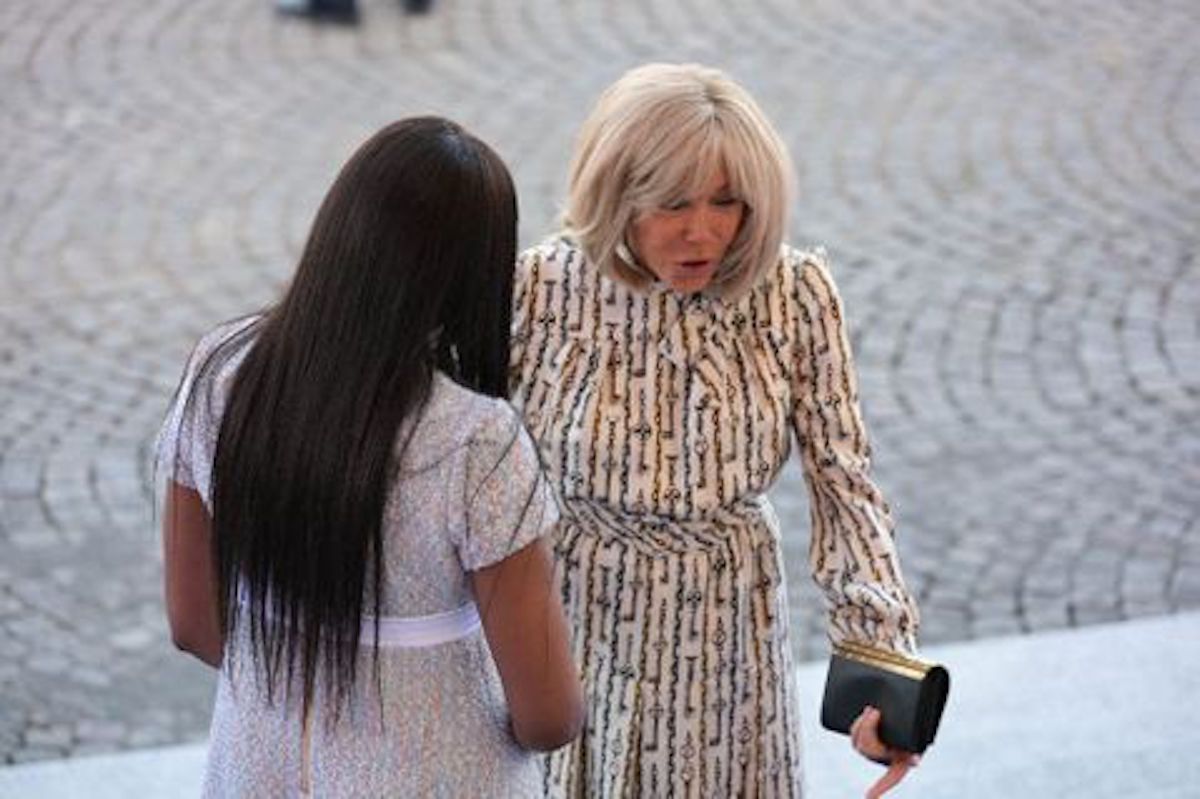
The First Lady, as the president's wife, is now a public figure. Her face is everywhere: in magazines, on television, in newspapers. Her outfits, her gestures, her words are analyzed.
For the president's mother, this media overexposure must have been particularly difficult to bear. Seeing the woman she never fully accepted become the most publicized woman in France could only reopen old wounds.
Especially since the presidential couple is playing up their unabashed romance. They hold hands in public. They exchange knowing glances in front of the cameras. They cultivate the image of a triumphant love that has overcome all obstacles.
But among these obstacles overcome is the president's family. And nobody talks about that. Not officially, anyway. Until this book by Béatrix de L'Aulnoit.
What the book really reveals
In They Loved Them So Much , Béatrix de L'Aulnoit goes further than in all her previous works. She doesn't just skim the surface of the subject. She delves into the depths of the family drama.
The journalist gathered testimonies, cross-referenced information, and pieced together the emotional puzzle of this fractured family. And what she reveals is both touching and brutal.
First, there is this undeniable fact: Françoise Noguès has never been able to see herself as a stepmother. The very word seems incongruous to her. How can you be the stepmother of someone who is almost the same age as you?
"Being three years older than her stepdaughter, Françoise never managed to see herself as a stepmother," writes Béatrix de L'Aulnoit. A clinical, almost cold sentence, but one that says it all about the impossibility of this situation.
It's not a question of ill will. Nor of malice. It's a question of biological and social reality. You don't play the role of stepmother when you're old enough to be a friend, a colleague, a sister.
The sentence that sums up thirty years of torment
But the most striking passage in the book lies elsewhere. It is found in a quote that Françoise Noguès had shared with Anne Fulda years earlier. A quote that Béatrix de L'Aulnoit brings back to light.
When asked about her reaction to the news of her son's relationship with his teacher, the president's mother responded with disarming candor. No anger. No shouting. Just one sentence.
Six words that encapsulate the full spectrum of a mother's emotions in the face of the unthinkable. Six words tinged with irony, resignation, and perhaps a hint of bitterness. Six words that, thirty years later, still resonate.
"It's certain that we didn't go: 'How cool is that!'"
That's it. Everything has been said. In six words, Françoise Noguès sums up years of shock, resistance, and silent pain. No joy. No enthusiasm. No celebration. Just the clear-eyed realization that there was nothing to celebrate in this announcement.
The expression "Chic alors" —that old-fashioned, almost childish exclamation expressing joy and enthusiasm—is used here in the negative. Like a mirror image. No, there was no "chic alors" among the Macrons. There was silence. Shock. And then the long, very long period in the wilderness.
A belated but real relief
But the story doesn't end on this bitter note. For Béatrix de L'Aulnoit also reveals that things have changed. Slowly, painfully, but they have changed.
Over time, over the years, and perhaps also with the wisdom that comes with age, relations between the president's mother and the First Lady have calmed down .
"Their relationship with the First Lady has calmed down. Now they talk to each other like two intelligent people can ," the journalist writes in her book.
This statement is remarkable in several respects. First, it confirms that there was indeed a period of tension, even open conflict. We only speak of appeasement after a storm has passed.
Then, the wording is interesting: "as two intelligent people can do ." Not like a mother-in-law and her daughter-in-law. Not like two women from the same family. No. Like two intelligent people. Two adults who chose reason over emotion.
It's an intellectual calming, not an emotional one. A diplomatic ceasefire, not a complete reconciliation. And in the context of this family, that's already significant .
The father, however, did not make that peace
While the president's mother has managed, with some difficulty, to find a modus vivendi with her daughter-in-law, the father remains at square one. Jean-Michel Macron is sticking to his guns.
The lunches in Amiens, without the First Lady, are the most tangible proof of this. The president's father has drawn a line. On one side, his son. On the other, his son's wife. And he refuses to cross that line.
This uncompromising stance from the father contrasts sharply with the mother's evolution. It's as if, in this parental couple, it was the woman who had traveled the longest path. The most difficult path, too.
Because accepting the unacceptable takes courage. And Françoise Noguès, even if she never jumped for joy, at least had the courage to reach out. To speak. To listen. To coexist.
Her husband, however, chose the path of rigidity, of fidelity to his principles, even at the cost of sacrificing part of his relationship with his own son. This radical choice, according to testimonies, is taking a heavy toll on the family.
What this story says about France
Beyond the family anecdote, this story says a lot about French society. About its taboos, its hypocrisies, its contradictions.
France is the land of love. The land of romantic freedom. The land where romance has been elevated to an art form. But when love takes an unexpected form, when it challenges conventions, the reactions are often far less romantic.
The presidential couple has crystallized this paradox. In public, their love story is celebrated. It is considered beautiful, courageous, and inspiring. But in private, how many families would accept the same situation?
Françoise Noguès' reaction—that "we didn't exactly look elegant then" —is undoubtedly the one millions of French parents would have had in her place. A human, understandable, universal reaction.
Because deep down, this mother wasn't asking for anything extraordinary. She simply wanted her son to experience a normal love story . A story that wouldn't make headlines. A story that wouldn't disrupt the established order.
Fate decided otherwise. And Françoise Noguès, with modesty and dignity, finally accepted what fate imposed upon her. Not with joy. Not with enthusiasm. But with the intelligence that Béatrix de L'Aulnoit speaks of.
A book that opens a new chapter
The publication of They Loved Them So Much marks a turning point in our understanding of the presidential family. For the first time, the veil is lifted on the behind-the-scenes drama that has lasted for three decades.
Béatrix de L'Aulnoit's revelations add a human dimension to figures the French thought they knew. Behind the smiling First Lady, there is a woman who waited ten years to live her love openly.
Behind the triumphant president, there is a son having lunch alone with his father because his wife is not welcome. Behind the glamorous couple at the Élysée Palace, there are two families bearing the scars of an extraordinary story.
And behind Françoise Noguès, this discreet and dignified mother, there is a woman who has weathered thirty years of emotional turmoil. A woman who never said "great then ." But who, ultimately, found the strength to make peace.
Not with enthusiasm. Not with fanfare. But with that quiet intelligence which is perhaps, at its core, the noblest form of maternal love: accepting what one does not understand, because that is what makes one's child happy.
Béatrix de L'Aulnoit's book has been available in bookstores since May 7, 2026. It promises to generate considerable discussion in the coming weeks. For while the story of presidents and their mothers is a story of France, that of Françoise Noguès is perhaps the most universal of all.