

Pain in the lower back is one of the most frequent reasons for consultation. Many people immediately associate it with poor posture, contractures or muscle wasting, but this pain does not always have a mechanical origin. In certain cases, the lower back can be the place where the body reflects an internal problem, especially when the kidneys are under stress.
Understanding how to differentiate muscle pain from a kidney signal can make a big difference in detecting a problem in time that, if ignored, can silently advance.
How does kidney pain manifest itself?
Pain associated with the kidneys is usually felt in the lower back, but it is not the same as typical contracture pain. Generally:
- It is located deeper and on the sides of the spine
- It can feel like internal pressure
- Does not improve with changes in posture
- It is sometimes accompanied by burning when urinating, changes in urine color, or swelling
When these symptoms appear together, the body could be signaling that the kidneys are struggling to properly filter toxins.
Why drinking water alone isn’t always enough
There is a belief that the more water you drink, the better your kidneys work. However, kidney filtration depends not only on the volume of fluid, but also on its composition.
This is where a key substance comes into play: citrate.
Citrate helps prevent minerals such as calcium from clumping together to form crystals that can turn into stones. Without enough citrate, even good hydration can be insufficient to protect the kidneys.
Citrate-rich foods such as lemon, lime, and other citrus fruits can help create an environment less prone to stone formation.
8 symptoms that indicate a liver problem and what to do to recognize and treat them  I’ll explain here:
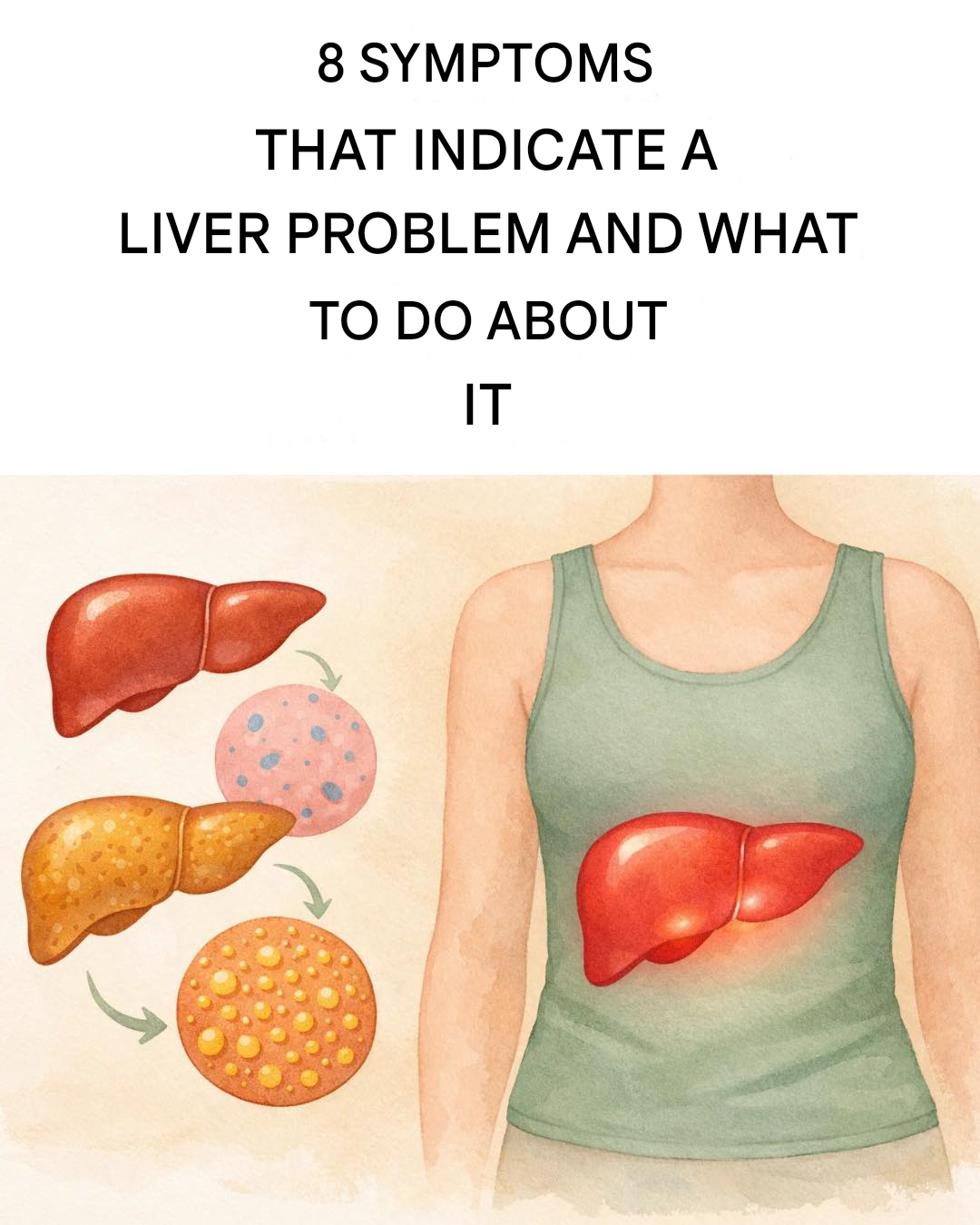
The liver is an essential organ that performs important functions for our daily well-being and for the proper functioning of our body. In this article we list some symptoms that may indicate the presence of a liver problem.
Find out more
health
Vitamins and supplements
Resources and medical literature
A simple discomfort or an annoyance does not always mean that there is a serious illness. It can often be a temporary and not a serious problem. However, if in doubt, the best thing to do is to consult a doctor.
The liver performs three vital functions: purifies the blood by eliminating toxins and cells no longer useful, helps to synthesize carbohydrates and lipids, and preserves some basic nutrients to obtain energy, such as the vitamins A, D, E and K.Vitamins and supplements
As we have already said before, the presence of one of the symptoms that we list continuously does not constitute an irrefutable diagnosis, but a clue to a possible problem to be submitted to the attention of a doctor.
Nausea. When a person regularly experiences nausea and other symptoms such as dizziness, vomiting, abdominal bloating and headache, it could be a clue to a liver problem.
Pain in the upper part of the abdomen. A pain located under the ribs, and radiating to the back, could be a symptom of a bile colic. The pain is almost always accompanied by other symptoms such as abdominal swelling and fever.
Juggling. When you have excess bile in your body and blood, your skin takes on a yellowish color. This problem is called jaundice and is one of the most common symptoms of a liver problem, such as hepatitis.
Find out more
Hospitals and health services
vitamins
Diseases
Tiredness and weakness. Among the first symptoms of a liver problem we find fatigue and weakness. Sometimes they are not given the right importance to these symptoms, not as long as they become persistent and increase.
Fever. A patient with liver problems may have a high fever, especially in the presence of an infection. Although it is a very common symptom, it does not always manifest itself.
Light coloured stools. The color of the stool represents an important signal on the state of health of the body. In case stools have a light color, they may indicate a liver problem.Health
Feeling of itching. This symptom is caused by the accumulation of bile under the skin. You feel an itchy feeling caused by the reaction of the blood to an excess of toxins that the liver is no longer able to purify.
Bleeding and hematomas. Although they are less frequent, these symptoms may indicate liver abnormalities.
To protect the liver it is necessary to adopt a healthy lifestyle, improving your diet by increasing the consumption of fruits and vegetables, drinking a lot of water and avoiding the consumption of foods that are too fat and too processed.


0 Comments:
Post a Comment