
Garlic doesn’t belong in your ear canal, and that’s exactly why this post is so dangerous. The claim grabs attention with a swollen promise: ear relief, hidden action, and a result you can “see” fast.
What it actually triggers is not healing — it’s a hot, irritating trap inside one of the most delicate passages in your body. The skin in there is thin as tissue paper, and when a clove sits against it, the pressure, moisture, and natural compounds can turn a simple ear into an inflamed, miserable mess.
By evening, that ear can feel stuffed, tender, and strangely full, like cotton was packed behind the eardrum. You tilt your head, chew, talk, and suddenly every tiny movement sends a sharp little jolt through the canal.
That’s the part the glossy post skips: your ear is not a kitchen pan. It’s a sealed, sensitive tunnel with no room for experiments, and once irritation starts, it can snowball into pain, swelling, and trouble hearing clearly.

The Ear Canal Isn’t a Garlic Drawer
The ear canal is more like a narrow hallway with a velvet wall than a place for raw plant matter. Put garlic there and you’re not “supporting” anything — you’re pressing a pungent, moisture-heavy object against fragile tissue that was never built for that contact.
Think of a paper-thin filter jammed into a running fan. The air still pushes through, but now everything rattles, overheats, and starts to smell wrong.
The first thing people notice is the pressure. Then comes the itch, the sting, the odd plugged-up feeling that makes you keep touching the ear as if that will somehow fix it. It won’t.
The body reads garlic in the ear as a foreign intrusion, not a remedy. The skin can react, the canal can swell, and any tiny scratch becomes a doorway for more trouble.
And here’s the ugly truth the wellness machine barely whispers about: nobody builds a profit empire around telling you to leave your ears alone. A clove of garlic is cheap, common, and absolutely not a substitute for understanding what’s actually happening inside the canal.
Why the Pain Can Spread So Fast

Once the canal gets irritated, the whole area can feel louder than it should. Sound seems muffled, your own voice feels strange, and the ear starts acting like a waterlogged tunnel after a storm.
That’s because swelling narrows the passage the same way a crushed garden hose chokes off flow. Less space means more pressure, and more pressure means every heartbeat, chew, or head turn can become impossible to ignore.
Some people also end up with discharge or a burning sensation, especially if the skin was already sensitive. Garlic does not “draw out” the problem — it can create a second problem on top of the first.
Why the discomfort feels so stubborn is simple: the ear canal is self-protective, but it’s also easy to upset. Once the lining is angry, it doesn’t calm down just because a folk remedy was trendy on social media.
That’s why the body can seem to rebel so quickly. What started as curiosity turns into a tender, clogged, throbbing ear that demands real care, not kitchen folklore.
What People Actually Wanted From This Trick

Most people reaching for garlic aren’t chasing a recipe — they’re chasing relief. They want the ear to stop hurting, the pressure to lift, the ringing to quiet, the panic to back off.
But the body doesn’t respond to wishful thinking. It responds to what touches the tissue, what blocks the canal, and what inflames the lining like a match near dry paper.
For someone already dealing with an earache, this can feel like pouring hot sauce into a cracked cup. The hope was comfort; the result can be more irritation, not less.
The real fix is not to force a folk remedy into a place that can’t tolerate it. It’s to protect the canal, respect the anatomy, and get the ear checked when pain, pressure, or hearing changes show up.
That’s the shift people miss: the ear is not asking for a miracle ingredient. It’s asking for less abuse, less guessing, and a smarter response before the problem deepens.
P.S.

One common habit ruins the whole situation before it even starts: putting anything oily, crushed, or fibrous into an ear that’s already irritated. That can trap moisture, seal in debris, and turn a simple issue into a stubborn one.
The next thing worth knowing is how to tell a harmless ear twinge from the kind that needs attention before it spreads.
This article is for informational purposes only and does not replace professional medical advice. Please consult your healthcare provider for personalized guidance.
Each finger of the hand corresponds to 2 organs: an effective Japanese therapeutic method
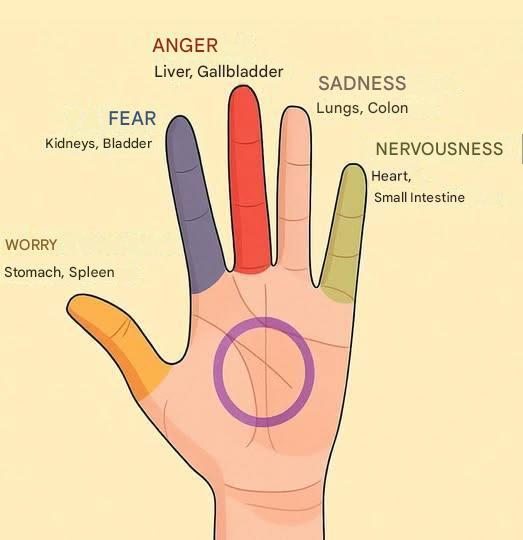
Jin Shin Jyutsu is an ancient Japanese healing technique that helps balance emotions by stimulating specific points on the hands. It is an alternative medicine based on the fingers and the principle of energy flows throughout the body, which directly impact our physical and emotional health.
The basic idea of this philosophy is that each finger is connected to a specific organ and an emotion. If you decide to work on an organ, you should apply pressure to the associated point on the hand for about 3-5 minutes, trying to relax.
The thumb is associated with the stomach and spleen, but also with anxiety and depression. Related symptoms include stomach pain, skin problems, headaches, and neurosis.
The index finger is associated with the kidneys and bladder, and with emotions such as disappointment, fear, and confusion. Symptoms include muscle pain, back pain, toothache, and digestive problems.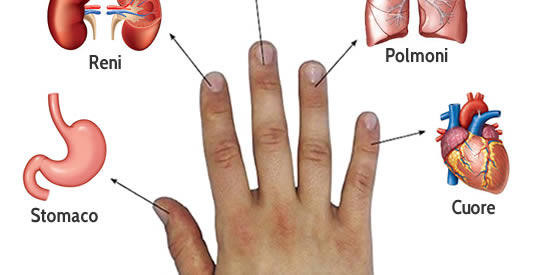
The middle finger is associated with the liver, gallbladder, and emotions such as anger and indecision. Circulatory problems, fatigue, frontal headaches, and migraines are symptoms associated with it.
The ring finger is associated with the lungs and large intestine, and emotions such as negativity and sadness. Symptoms associated with it include respiratory problems, asthma, digestive issues, and skin conditions.
The pinky finger is directly connected to the heart and small intestine. Anxiety, nervousness, and worry are associated with it, as are sore throats, bone problems, and abdominal swelling.


0 Comments:
Post a Comment